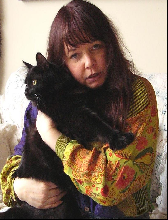
Portland, OR— Carol Niemeyer is being recognized by Continental Who’s Who as a
Ms. Niemeyer received her Bachelor's from U.C. Berkeley. She was fascinated by the behavior of non-human primates and studied their social behavior in the Departments of Anthropology, Psychology, and Zoology. She earned an Independent Honor's Degree in Evolutionary and Comparative Behavior and Biology.
After graduation, Ms. Niemeyer was a zookeeper for the adult primates at Cheyenne Mountain Zoo in Colorado Springs, Colorado, in July, 1971. She was the first woman to work with adult exotic animals at a zoo in the United States. According to Ms. Niemeyer, women working with wild animals in zoos traditionally raised and cared for the infant animals in the nurseries and children's zoos. She had worked in the Children's Zoo at Franklin Park Zoo in Boston, Massachusetts, in 1970. She was also a Playboy Bunny at the Boston Playboy Club during this time.
Ms. Niemeyer shared that a notable memory of her career occurred one day as she was displaying a huge boa constrictor from the Traveling Zoo at a local park in Boston. She was sitting next to a chain link fence with the boa constrictor around her shoulders. Before she was aware of any danger, the boa constrictor had intertwined itself around her neck and the fence. She could not dislodge the massive, strong snake. Ms. Niemeyer said that fortunately, another employee who drove the Traveling Zoo truck was able to assist her.
Later on, Ms. Niemeyer decided that she wanted to return to school to take more of the hard sciences in order to become a Psychiatrist. She earned straight A's in those difficult courses, but was not allowed to apply to take the Medical College Admissions Test because she was a woman (New Orleans, early 1970's). She returned to zoo work and was later a zookeeper at the National Zoo in Washington D.C. and at the zoo located in Dallas, Texas. At the National Zoo she became involved with the Curator of Reptiles. She notes that one day he went to the airport to pick up three extremely poisonous snakes from Southeast Asia. There was one each of yellow, green, and brown with triangular heads in two snake bags. The Reptile Curator took them home and took them out of the bags to inspect them using an improvised snake hook made from a clothes hanger. Both he and Ms. Niemeyer spent the night there. The next day the Reptile Curator found he only had two of the very poisonous snakes, with no known anti-venom. The zoo X-rayed the snakes to see if one had devoured the other one which was missing, but that was not the case. That evening, the Curator's roommate, who didn't know about the lost snake, directed the Curator's attention to a bright yellow snake in their fireplace stating “It doesn't look like a garter snake!” The snake had been loose in the apartment while Ms. Niemeyer, the Reptile Curator, and his roommate slept.
At the National Zoo, Ms. Niemeyer worked briefly with the elephants. She said that one day, a young male elephant chased her out of the enclosure with its ears and trunk flailing aggressively. Ms. Niemeyer escaped this dangerous animal, but decided to return to work with the primates again. At the Dallas Zoo, Ms. Niemeyer was a Research Technician for the primates. She participated in Jane Goodall's study of chimpanzees in zoos called ChimpanZoo. Jane Goodall's work with wild chimpanzees had been the inspiration for Ms. Niemeyer’s career, and the two had met a number of times
In between these two zoo jobs, Ms. Niemeyer lived in the Amazon jungle twice, both times at least eight hours away from any city by boat, but in completely separate locations. In one location, the ant was the king of the jungle. In the other location, it was the mosquito. In the first location, she assisted in a study of Titi monkeys. She learned what it is really like to study primates in the wild. The crew got up very early and followed these tiny monkeys through their daily ranges, cutting trails with machetes, and watching them through binoculars thirty meters high in trees. Ms. Niemeyer notes that the best part of the day was when she and Barbara Sleeper went to the stream for their daily bath after following the monkeys all day in the hot, humid jungle. According to Ms. Niemeyer, Barb Sleeper is now a very prolific writer, living in Seattle.
Ms. Niemeyer was also the Director of a Wildlife Rehabilitation Center in the Amazon Jungle. She took an anteater for a daily walk while cradling a wooly monkey who gripped her with its prehensile tail, as well as all four limbs. Ms. Niemeyer noted that this felt wonderful, comparing it to being held. Tourists paid to come to the location, again, about eight hours from any civilization by boat. She said that once, she and a group traveled by boat another eight hours away through waters infested by alligators with only their eyes visible in the dark night above the water. The destination was to visit the Mayoruna Indians who had a previous reputation as fierce, nomadic cannibals who did not get along very well with the white missionaries. Reportedly they also used to eat their dead relatives in order to absorb their spirits. They made interesting facial tattoos that looked sort of like railroad ties and inserted thin fibers of palm leaf into holes made in their noses and faces to make whiskers like jaguars. Fortunately, the group made it back safely from visiting the Mayorunas, but the tourist season in the jungle ended.
Ms. Niemeyer said that one day, all of the employees at the camp mutinied and returned to civilization. They were no longer being sent edible food and drinkable water in their isolated location, so Ms. Niemeyer had to leave, as well.
Ms. Niemeyer continued her education in non-human primate behavior, obtaining a Master's Degree from the University of Stirling in Scotland. She was told that the enormous masterpiece was really a PhD. She could have changed it to a PhD in about two semesters, but by this time she was very deep in debt from overseas student's tuition, so she returned to the U.S. Back in the United States, she volunteered at the Oregon Zoo in Portland on a study of Golden Lion Tamarin monkeys, living free at that Zoo.
She later utilized her Master's Degree working at the Oregon National Primate Research Center, first as a Primate Behavior Technician, and then was promoted to Animal Behavior Supervisor. Her duties were to improve the psychological well-being of the primates. To do that, among other things, she formed pairs and groups of individually housed monkeys who were often very aggressive to each other. She also provided them with devices, the favorite being short chunks of cherry wood, which the monkeys shredded, in order to keep them occupied and hopefully prevent overgrooming and self-injurious behaviors. She also arranged with a local supermarket to get special produce for the monkeys to eat, and supervised the Animal Behavior Technicians. Carol authored a number of articles and gave presentations at national and international Primatological Conferences.
Ms. Niemeyer shared that one day, in 2002, something surprising occurred. One of her assistants, who had done a good job for a year, unexpectedly resigned. The next day, it was found that he was a spy for the radical animal rights organizations. According to Ms. Niemeyer, nobody at the Primate Center knew this. He did not criticize Carol. He knew she was doing all she could for the monkeys.
Ms. Niemeyer continued to completely dedicate her life to helping the monkeys as much as possible. Although she was paid a salary and was expected to leave work at 4 p.m, she frequently worked until late at night. According to Ms. Niemeyer, not long after the spy resigned, the Administration decided that since she worked so much, she must ALSO be a spy, and so they fired her. She found out much later that this was not the only reason she lost her beloved career. There was a woman working at the Primate Center who coveted her job, and that woman orchestrated Ms. Niemeyer losing her career.
Ms. Niemeyer is considered an expert in behavioral primatology. She supports the Jane Goodall Institute, reading, movies, and singing in a choir in her spare time. She will soon be participating in the ChimpanZoo behavioral data collection on the chimpanzees at the Oregon Zoo in Portland.