Continental Who’s Who
Philip R. Kennedy, MD, Ph.D.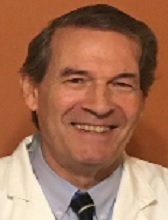
PHILIP R. KENNEDY, MD, PH.D. - NEUROLOGIST
Duluth, GA – Philip R. Kennedy, MD, Ph.D., is being
recognized by Continental Who's Who as a Featured
Top Neurologist in 2022 for his outstanding work in the field and years of
expertise at Neural Signals Inc. and at Robert A. Gadlage MD FACS &
Associates PC.
Dr. Kennedy has been passionate about neurology since a
young age. Working as a Neurologist and Neuroscientist, Dr. Kennedy is the CEO
and Chief Scientist of Neural Signals Inc. Dr. Kennedy founded Neural Signals
Inc. in 1989 to develop a brain-computer interface to allow paralyzed patients
the ability to communicate with the external world and control external
devices. Using his own funds to start the company, Dr. Kennedy researched a
novel implantable device for detecting and transmitting signals through the
brain's cerebral cortex and called his invention the neurotrophic electrode. He
is very proud of this critical work, saying, "For many decades, the idea
that we could control computers with little more than our thoughts has been the
stuff of science fiction and the dream of many scientists. Neural Signals is
fortunate to be the historic first to allow a locked-in man — who is alert and
intelligent but unable to move or speak — the ability to control a computer
directly with neural signals."
Dr. Kennedy has dedicated his life to creating innovative
ways to digitalize a person's thoughts. A pioneer in the field, Dr. Kennedy
implanted wire electrodes in a paralyzed man's brain in the 1990s. The man,
whom Dr. Kennedy referred to as the "first cyborg," successfully
communicated through a brain-computer interface for the first time.
In 1999, The Washington Post referred to Dr. Kennedy as
possibly being "a new Alexander Graham Bell" for his incredible
breakthroughs in allowing paralyzed individuals to regain the ability to
communicate. He has been published in major scientific journals, and the NIH
has funded his research.
In 2014, Dr. Kennedy undertook a shocking medical procedure:
implanting neurotrophic electrodes in his own fully functioning brain to
attempt to verify that it worked. After the 11-hour surgery, he initially had
trouble communicating, but he wore and tested the device's capabilities for 88
days. Thanks to his decades of research and deep personal involvement, Dr.
Kennedy has developed a successful speech prosthesis, which remains the main
aim of his current research.
Dr. Kennedy is the author of Unlocking Erik: A Freedom
Journey to Restore the Speech of Those with Locked-In Syndrome. The book tells
the true story of Dr. Kennedy's fight to restore speech to Erik, a 16-year-old
with Locked-In Syndrome who was mute and paralyzed, only able to communicate
"yes" and "no" with eye blinks. Erik inspired Dr. Kennedy
to attempt his famous neurotrophic electrode surgery. He also wrote the science
fiction novel 2051. He believes that brain-computer technology can be ethically
offered to consumers and patients.
Apart from his research work, Dr. Kennedy joined Robert A.
Gadlage, MD FACS, & Associates PC, where he currently sees patients. His
specialty is patients with various neurological disorders, such as seizures,
sleep disorders, headaches, neuropathies, radiculopathies, strokes, myasthenia
gravis, myopathies, multiple sclerosis, ALS, post-concussion syndromes, Bells
palsies, carpal tunnel syndromes, and Piriformis syndromes.
Receiving an excellent education while growing up in Cashel
and Limerick, Ireland, Dr. Kennedy graduated from the University College Dublin
School of Medicine in 1972. He then received his Doctor of Philosophy degree
from the Northwestern University of Chicago in 1983. Dr. Kennedy spent several
years at the Department of Physiology at the University of Western Ontario in
Canada. From 1980 to 1983, Dr. Kennedy completed his Ph.D. at Northwestern
University of Chicago. Next, he became a postdoctoral Fellow with Professor D.
Humphrey at the Department of Physiology at Emory University in Atlanta. He
then moved into a job as a Research Scientist at the Biomedical Center at
Georgia Institute of Technology in 1986 and worked as an Associate at Yerkes
Primate Center at Emory University. Returning to clinical work at Emory
University in 1993, Dr. Kennedy completed a residency in Neurology. He is
board-eligible in Neurology by the American Board of Psychiatry and Neurology
(ABPN) and has practiced medicine for 50 years.
To remain abreast of updates in the field, Dr. Kennedy is a
member of the Society for Neuroscience, the International Brain Research
Association, the American Association for the Advancement of Science, the
American Academy of Neurology, and the American Medical Association.
Awards for his work include Discover Magazine 1st Place in
Assistive Technology (1999), Atlanta Magazine Health Care Heroes Award (1999),
World Technology Network Award London (2000), Alfred Mann Foundation Scientist
of the Year (2004), Gold Electrode Award Neurotech (2014), and On-Time Doctor
Award (2015).
In his free time, Dr. Kennedy shares that he enjoys
photography, playing pool, working out, and playing table tennis.
Dr. Kennedy would like to dedicate this honorable
recognition In Loving Memory of his father, Dermot Kennedy, MD, and in honor of
a fellow Neurosurgeon and mentor located in Ireland, Fergus Donovan, MD.
For more information regarding creating your very own press release, please visit our
Press Release registration page.