Continental Who’s Who
Robert Shuman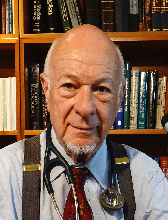
ROBERT SHUMAN - PRESIDENT AND CHIEF EXECUTIVE OFFICER
Placerville, CA —
Robert M. Shuman, MD, FAAN, is recognized by Continental Who’s Who as a
Distinguished Healthcare Professional in the field of NeuroDevelopmental
Medicine. We acknowledge his work and
contributions in developmental neuropathology, his care of infants, children,
and parents in Clinical Pediatric Neurology, his founding and development of
Child Neurology, Inc. as its President and Chief Executive Officer, and his
continuing consultative work in vaccine injuries of infants and children in the
Office of Special Masters (for Vaccine Injuries) within the Court of Federal
Claims.
Dr. Shuman has found success since 1991 as the president and
chief executive officer of Child Neurology, Inc. With more than 50 years of experience in
pediatric pathology, pediatric neuropathology, pediatric neurology, and
pediatric neuroimaging, he specializes in the treatment of pediatric epilepsy,
neonatal strokes, cerebral palsies, metabolic disorders, congenital
malformations, and developmental disorders.
He is committed to the early recognition and interventions in neonatal
and infant disorders. His practice of
Child neurology is constantly seeking ways to unleash and redirect the growth
potential of the infant brain towards healing static injuries of the infant
brain.
Prior to founding CNI, Robert was the Chairman of Neurology at the University
of Oklahoma. This was a burden he assumed at the request of the Dean of the
School of Medicine. Before chairing Neurology at Oklahoma Dr Shuman was the
Vice Chairman of Pathology and the Director of Neuropathology and Anatomic
Pathology at the University of Oklahoma.
He was the Director of Neuropathology for the joint collaborative
program in the Neurosciences between the University of Nebraska and Creighton
University. With the leadership of Dr.
John Moossy, Director of Neuropathology, Dr. Shuman founded Pediatric Neuropathology
at the University of Pittsburgh, combining the perinatal population of Magee
Women’s Hospital with the pediatric population of the Pittsburgh Children’s
Hospital.
Robert came to medicine under the influence of his mother, who was raised by a
Christian Science Practitioner. His mother
surrounded him with books from infancy on, many of them medical tomes which he
began to read at an early age. She
shaped his identity as a healer in medicine and his awareness of the importance
of literature as a repository of knowledge.
Robert was cherished and loved throughout his secondary education,
promoted and rewarded by his teachers and community. He was a Rockefeller Regents Scholar
throughout his 1963 Baccalaureate in Experimental Psychology at Cornell
University, where he learned to explore and use the treasures of a deeply
resourced library system. He won Special
Departmental Honors in Experimental Psychology at Cornell. He was a Goodrich Scholar and a Dean’s Scholar
at Stanford University School of Medicine, with its faculty riches, the
regional branch of the National Library of Medicine, and its emphasis on
mentoring. He graduated in 1968, after
spending 6 months in the Pathology Department of Professor Thomas Symington at
the University of Glasgow. Select
faculty mentors at Stanford helped him devise his post-graduate training
program in pediatric neuropathology, a specialty which did not then exist.
These resources led him to the University of Colorado residency in Pediatrics
under Professor C. Henry Kempe who popularized the issue of Child Abuse while
providing a rigorously academic pediatric residency training program and a
nationally renowned program in pediatric infectious diseases. As per “The Plan” Robert went on to the
University of Washington for Pediatric Pathology with J. Bruce Beckwith, (JB).
It was JB who recognized and described Sudden Infant Death Syndrome
(SIDS). Finally, at 30 years of age,
young Dr. Shuman was supported for the next 5 years as an extramural NIH
research fellow in the Neuropathology Laboratory of Dr. Ellsworth C. Alvord,
Jr. (Buster) at the University of Washington.
The NIH Fellowship was awarded specifically for the study of Pediatric
or Developmental NeuroPathology. Dr.
Alvord was the co-discoverer of Myelin Basic Protein and its use as the inciter
of Experimental Allergic Encephalomyelitis, a model for the study of
inflammatory diseases in the CNS. Dr.
Alvord was a wonderful mentor who was generous with his time, teaching,
financial and research resources. He had
a fierce commitment to understanding neurobiological problems and demonstrated
his enjoyment in doing so. Here, Dr.
Shuman forged his life-long collaborative partnership in Developmental
Neuropathology with the brilliantly irascible Dr. Richard W. Leech. It was in this neuropathology laboratory that
Shuman, Leech and Alvord made their discovery of pHisoHex Myelinopathy in
premature human infants (vide infra).
Dr. Shuman returned to the bedside in 1982-1984 for his third residency
training program at the University of Kentucky College of Medicine. This residency was devoted to Neurology and
Child Neurology with Dr. David Clark, a masterful practitioner of the art of
the neurology history, neurology examination, and of neurology care. He then resumed his academic career in
Pathology, Neuropathology, and Neurology in Oklahoma (vide supra). He is board-certified in Anatomic Pathology
(Neuropathology), Neurology with special competence in Child Neurology, and in
NeuroImaging. By 1990 Dr. Shuman had
spent decades in clinical research in Pediatric Neuropathology. Now he wanted to touch the living. He returned to the bedside by founding CNI
(vide supra).
Alongside his responsibilities as a child neurobiologist and academic
administrator, Dr. Shuman has co-authored multiple medical textbooks, including
1982 Neuropathology: A Summary for Students and 1985 Pediatric
NeuroSonography. Throughout his career
he has contributed articles to several professional journals such as
Pediatrics, Archives of Neurology, Annals of Neurology, Journal of Child
Neurology, The American Journal of Clinical Pathology, and Neurological Clinics
of North America. A prolific researcher,
Dr. Shuman earned widespread recognition for exposing the risks of
neurotoxicity in applying the anti-staphylococcal soap pHisoHex to newborn
infants on our Neonatal ICUs, and then replicating pHisoHex Myelinopathy in rat
pups by washing them with pHisoHex just as human infants had been washed. He described the neuropathology of the amino-acidopathies
and the natural history of ependymomas in childhood. He created a model of neonatal Herpes hominis
viral encephalitis in newborn pigs. He described the occurrence, incidence, and
predispositions to little strokes in the developing myelin of premature infants
(PVL). He proved the frequency of and
predispositions to large arterial strokes in term infants (CVA). He linked this autopsy work to the MRI
documentation of the same perinatal strokes in a population of living children
with Cerebral Palsy and epilepsy. He
established both the KetoGenic Diet and
the Vagal Nerve Stimulator in the practice community for the treatment
of otherwise refractory Pediatric Epilepsy.
Throughout his career, Dr. Shuman boasts numerous accomplishments and awards in
recognition of his contributions to his field. He is proud of his discovery of
pHisoHex’s toxicity in premature infants, his documentation of perinatal
strokes in pediatric epilepsy, his application of the ketogenic diet to treat
epilepsy, and the use of vagal stimulation in the treatment of pediatric
epilepsy. He is proud of the children with intractable epilepsy whom he cured
with the intelligent use of trough blood levels of antiepileptics, of provocative
and ambulatory EEGs, and the flexible use of therapeutic modalities. He has earned the Best Teacher Award from the
University of Nebraska and a National Institutes of Health fellowship to study
pediatric neuropathology with Buster Alvord at the University of Washington. He
has been an active advocate for infants and children in the Vaccine Injury
Compensation Program for the past 25 years, always striving to understand and
explicate the pathogenesis of such injuries for the Court. He has nurtured a valuable professional
network through his memberships in the American Association for the Advancement
of Science (AAAS), the American Association of Neuropathologists (AANP), the
College of American Pathologists (CAP), the Child Neurology Society (CNS), and
the American Academy of Neurology where he is a Fellow (AAN).
In his spare time, he enjoys spending time with his family, developing and
driving fast cars with his daughter Val and his son Sky, photography and
travels with his wife and friend of 60 years (Marcia), and meeting with his
discussion group. This physician does
humbly honor the memory, dedication, skills and generosity of his high school
English teacher, Dr. David Manly, Ed.D.
Dr. Shuman acknowledges the support of his mentors: Dr. James Gibson,
PhD and Professor of Experimental Psychology at Cornell University College of
Arts and Sciences, and Dr. Robert “Corky“ Rosan, M.D., then an Assistant
Professor of Pathology, Department of Pathology, Stanford University School of
Medicine. He dedicates this recognition
to the loving memories of Ellsworth C. Alvord, Jr., MD, Professor of
NeuroPathology at the University of Washington (“Buster”) and Richard W. Leech,
Professor and Chairman of Pathology at the University of Oklahoma who has
always been an irascible but insightful colleague.
The doctor thanks his wife, Marcia, and their children, Sky and Val, for loving
him, for allowing him to do his consuming and important work, and for being constants
in his restless quest for medical goodness. Remarkable scholarly medical
contributions to the understanding and care of child neurology disease have
animated his joy and persistence in the practice of pediatric neurology. He brings to the bedside his wealth of
training and experience in the expression of and intervention with child
neurology diseases. He maintains his
empathy for the threats of childhood diseases, the stresses on parents and
sibs, and the need to listen. His
mother’s influences endure. Dr. Shuman
plans to continue researching and writing for the academic and legal
literatures. Dr. Shuman will continue to
partner with patients and caregivers to deliver high-quality, thoughtful,
collegial, and current care.
For more information regarding creating your very own press release, please visit our
Press Release registration page.